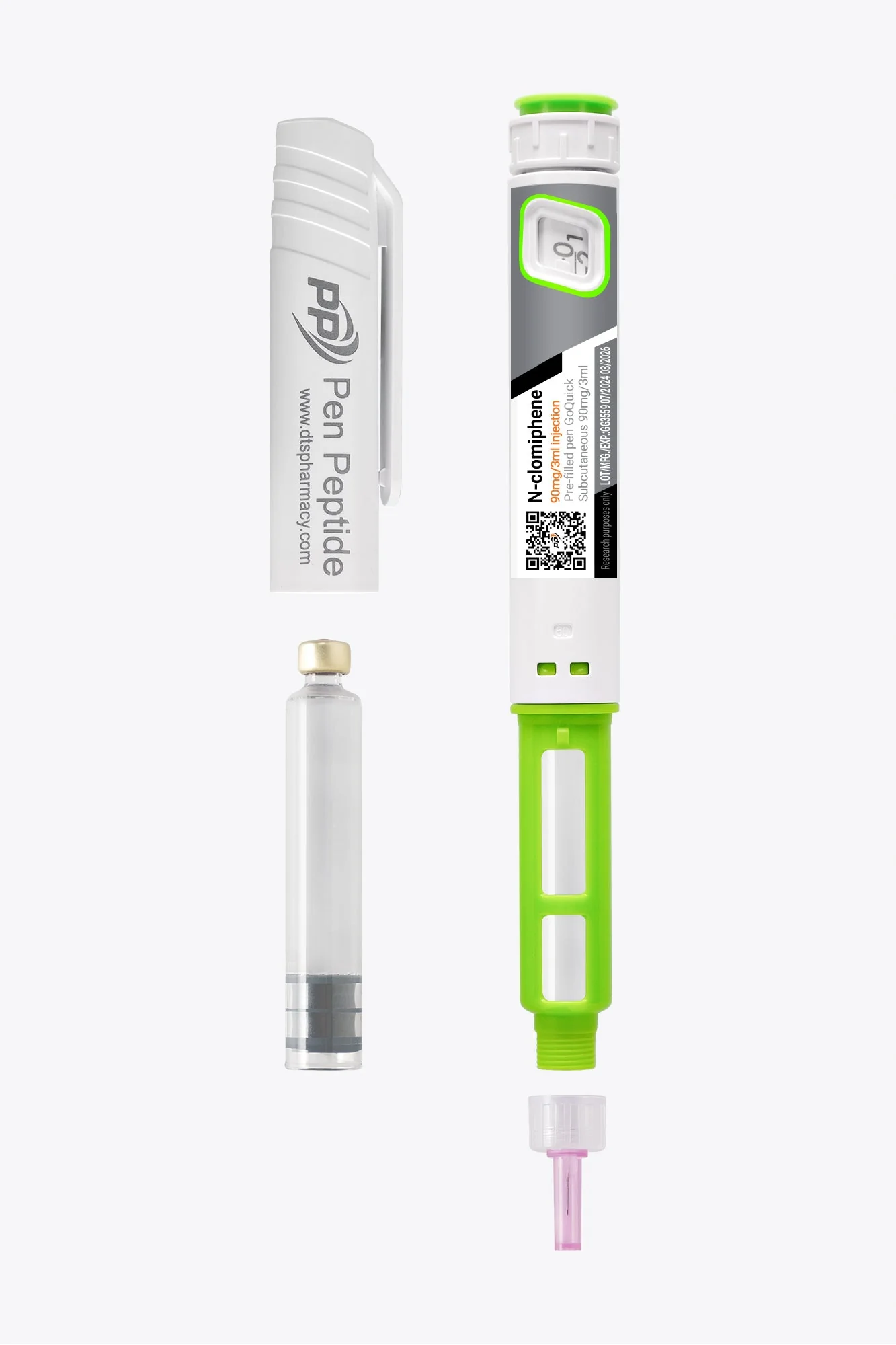
N-Clomiphene | 90mg/3ml
What Is N-Clomiphene?
N-Clomiphene (Enclomiphene) is the active isomer of clomiphene citrate—a compound classified as a Selective Estrogen Receptor Modulator (SERM). Unlike the standard clomiphene mix, which contains both E- and Z-isomers, N-Clomiphene represents the pure eutomeric form responsible for stimulating endogenous testosterone production by blocking estrogenic negative feedback in the hypothalamus.
In research settings, N-Clomiphene is studied as a non-steroidal alternative for stimulating the hypothalamic-pituitary-testicular axis (HPTA), especially in cases of secondary hypogonadism. Its selective mechanism and lower risk of estrogenic side effects make it a preferred candidate in protocols focused on hormonal restoration and the maintenance of androgenic function.
Mechanism of Action of N-Clomiphene
N-Clomiphene works by antagonizing estrogen receptors in the hypothalamus, leading to an increased release of gonadotropins—luteinizing hormone (LH) and follicle-stimulating hormone (FSH)—from the pituitary gland. This stimulation promotes natural testosterone production in the testes without requiring external androgen sources.
Unlike the Z-isomer (Zuclomiphene), which exhibits stronger estrogenic activity and longer retention in the body, N-Clomiphene has a shorter duration of action and provides a more precise hormonal response. This makes it suitable for controlled research protocols with minimal accumulation over time.
Scientifically Supported Potential Benefits of N-Clomiphene
Research on N-Clomiphene has identified several potential benefits, including:
- Increased LH and FSH secretion leading to enhanced natural testosterone production;
-
Improved hormonal balance in models of secondary hypogonadism;
-
Fertility preservation in studies where spermatogenesis maintenance is desired;
-
Regulation of estrogen-dominant conditions through central receptor blockade;
-
Lower risk of estrogenic effects compared to traditional clomiphene mixes;
-
Subcutaneous delivery in a stabilized formula ensuring consistent absorption under controlled conditions.
Dosage and Application of N-Clomiphene in Research Protocols
Suggested research protocol: 8-10 units once daily.
1 unit = 300mcg
Total pen content: 300 units
What Is the Difference Between N-Clomiphene and Clomiphene Citrate?
Clomiphene citrate is a racemic mixture composed of two isomers—Enclomiphene (E-isomer) and Zuclomiphene (Z-isomer)—in an approximate 62:38 ratio. Enclomiphene is the biologically active fraction responsible for stimulating gonadotropins (LH and FSH) and triggering endogenous testosterone production. Zuclomiphene, in contrast, has a longer half-life and stronger estrogenic effects, which can contribute to unwanted outcomes such as water retention, mood fluctuations, or hormonal imbalance.
N-Clomiphene is the isolated active form that eliminates the negative actions associated with Zuclomiphene. This makes it more effective and predictable in research settings, particularly in studies focused on preserving the HPTA axis, fertility, and recovery following suppressive cycles. Its shorter half-life allows for better dosing control and a cleaner hormonal response without systemic buildup.
Possible Side Effects of N-Clomiphene
Although N-Clomiphene demonstrates a favorable safety profile, some side effects have been observed, particularly with prolonged use or in individuals with heightened sensitivity:
-
Mild mood changes or irritability;
-
Headaches or tension related to estrogen receptor modulation;
- Temporary shifts in libido or androgen sensitivity.
Proper dosing and duration control are essential in minimizing the risk and expression of side effects.
Original: $104.84
-65%$104.84
$36.69Product Information
Product Information
Shipping & Returns
Shipping & Returns
Description
What Is N-Clomiphene?
N-Clomiphene (Enclomiphene) is the active isomer of clomiphene citrate—a compound classified as a Selective Estrogen Receptor Modulator (SERM). Unlike the standard clomiphene mix, which contains both E- and Z-isomers, N-Clomiphene represents the pure eutomeric form responsible for stimulating endogenous testosterone production by blocking estrogenic negative feedback in the hypothalamus.
In research settings, N-Clomiphene is studied as a non-steroidal alternative for stimulating the hypothalamic-pituitary-testicular axis (HPTA), especially in cases of secondary hypogonadism. Its selective mechanism and lower risk of estrogenic side effects make it a preferred candidate in protocols focused on hormonal restoration and the maintenance of androgenic function.
Mechanism of Action of N-Clomiphene
N-Clomiphene works by antagonizing estrogen receptors in the hypothalamus, leading to an increased release of gonadotropins—luteinizing hormone (LH) and follicle-stimulating hormone (FSH)—from the pituitary gland. This stimulation promotes natural testosterone production in the testes without requiring external androgen sources.
Unlike the Z-isomer (Zuclomiphene), which exhibits stronger estrogenic activity and longer retention in the body, N-Clomiphene has a shorter duration of action and provides a more precise hormonal response. This makes it suitable for controlled research protocols with minimal accumulation over time.
Scientifically Supported Potential Benefits of N-Clomiphene
Research on N-Clomiphene has identified several potential benefits, including:
- Increased LH and FSH secretion leading to enhanced natural testosterone production;
-
Improved hormonal balance in models of secondary hypogonadism;
-
Fertility preservation in studies where spermatogenesis maintenance is desired;
-
Regulation of estrogen-dominant conditions through central receptor blockade;
-
Lower risk of estrogenic effects compared to traditional clomiphene mixes;
-
Subcutaneous delivery in a stabilized formula ensuring consistent absorption under controlled conditions.
Dosage and Application of N-Clomiphene in Research Protocols
Suggested research protocol: 8-10 units once daily.
1 unit = 300mcg
Total pen content: 300 units
What Is the Difference Between N-Clomiphene and Clomiphene Citrate?
Clomiphene citrate is a racemic mixture composed of two isomers—Enclomiphene (E-isomer) and Zuclomiphene (Z-isomer)—in an approximate 62:38 ratio. Enclomiphene is the biologically active fraction responsible for stimulating gonadotropins (LH and FSH) and triggering endogenous testosterone production. Zuclomiphene, in contrast, has a longer half-life and stronger estrogenic effects, which can contribute to unwanted outcomes such as water retention, mood fluctuations, or hormonal imbalance.
N-Clomiphene is the isolated active form that eliminates the negative actions associated with Zuclomiphene. This makes it more effective and predictable in research settings, particularly in studies focused on preserving the HPTA axis, fertility, and recovery following suppressive cycles. Its shorter half-life allows for better dosing control and a cleaner hormonal response without systemic buildup.
Possible Side Effects of N-Clomiphene
Although N-Clomiphene demonstrates a favorable safety profile, some side effects have been observed, particularly with prolonged use or in individuals with heightened sensitivity:
-
Mild mood changes or irritability;
-
Headaches or tension related to estrogen receptor modulation;
- Temporary shifts in libido or androgen sensitivity.
Proper dosing and duration control are essential in minimizing the risk and expression of side effects.